Four Days in Budapest: The Itinerary I recommend to my Friends
Explore Budapest in four geographically sensible days, with time for its major sights, a thermal bath, the Danube and plenty of Hungarian food.
Published
September 27, 2026
Updated
September 27, 2026
Destination
Europe · Hungary
I grew up in Hungary, and I’ve planned Budapest trips for friends and explored the city with them more times than I can count. This is the route I keep coming back to: central Pest, the Buda hills, City Park and the baths, then the Jewish Quarter.
Four days gives us time to walk across the Chain Bridge, spend an afternoon in thermal water and stop for lángos and chimney cake along the way. Here’s the long weekend itinerary I recommend to my friends.
🚆 Airport transport and getting around
Budapest is easy to explore on foot, with the metro and trams filling the gaps between neighbourhoods. I would not rent a car for this itinerary. Download BudapestGO to plan journeys and buy tickets, or use BKK ticket machines at the airport and around the city.
From the airport, bus 100E goes directly to central stops including Kálvin tér and Deák Ferenc tér. Its separate ticket costs 2,500 HUF each way. The cheaper route is bus 200E to Kőbánya-Kispest, then metro M3. A valid city travelcard covers both legs; without one, use two single tickets or an 850 HUF 90-minute mobile ticket that allows the transfer. If you arrive late, check the connection in BudapestGO because the metro does not run all night, but Budapest has a great network of night buses.
For sightseeing, these are the tickets I would compare:
Ticket
Current price
When I would choose it
Single ticket
500 HUF
An occasional ride with no change between a bus and metro or between separate surface vehicles. Transfers between metro lines are allowed on one ticket.
Block of 10 single tickets
4,500 HUF
A small saving if you expect several straightforward rides and do not need unlimited travel.
30-minute mobile ticket
600 HUF
A short journey that involves a transfer.
90-minute mobile ticket
850 HUF
A longer journey with transfers, including the 200E plus M3 airport route.
24-hour travelcard
2,750 HUF
A busy sightseeing day with several rides.
72-hour travelcard
5,750 HUF
Usually my starting point for a long weekend when most journeys fall inside one 72-hour period.
Monthly Budapest-pass
8,950 HUF
Worth comparing for a full four days or longer, particularly if you will use the 100E airport bus.
The 72-hour card runs for 72 hours from your chosen start time, so check whether it covers both your arrival and departure. For a longer stay, compare it with the monthly pass: pass holders can get the 1,000 HUF add-on for the 100E, instead of 2,500 HUF, while 72-hour travelcard holders still need the full airport ticket. The monthly pass requires your original photo ID. These fares were checked in September 2026; check BKK’s current prices before travelling.
🗺️ Your four-day Budapest route
Four days gives you time to explore both sides of the Danube, spend an afternoon at a thermal bath and enjoy Hungarian food without packing every hour. I’ve grouped the stops by area in the map below so you can follow the route or adapt it to your own pace.
Start at the Hungarian Parliament Building. If you want to go inside, book the approximately 45-minute tour through the official Parliament ticket seller before your trip. The route includes the grand staircase and Dome Hall, where you can see the Holy Crown and Hungarian coronation regalia. As of September 2026, adult tickets are listed at 7,000 HUF for Hungarian and other EEA citizens and 14,000 HUF for non-EEA visitors; bring proof of eligibility if you buy the reduced EEA ticket. Check the price for your date when booking.
Afterward, walk south along the Pest bank to the Shoes on the Danube Bank. This memorial honours people murdered by Hungary’s Arrow Cross militia during the Second World War. It is close to Parliament and deserves a quiet stop before you continue through the city.
From the river, head to St Stephen’s Basilica. I would go up to the Panorama Terrace for the view over Budapest, then wander towards Váci Street if you want some shopping time. The basilica sells separate ticket options for the church and the terrace, so choose the one that includes the viewpoint.
In the evening, I recommend seeing Budapest from the Danube. A short sightseeing cruise is enough if you mainly want the views of the Parliament, Chain Bridge and Buda Castle. If you would rather make a whole evening of it, choose a dinner cruise. I would aim for a departure around dusk, when you can see the city before and after the lights come on.
A cheaper daytime boat option: BKV also runs a City Centre Cruise, currently 3,000 HUF per adult, with stops including Kossuth Lajos tér, Batthyány tér, Várkert Bazár and Petőfi tér. It is a separate sightseeing boat ticket, not included in an ordinary BKK travelcard. Check the BKV route and timetable before going: low Danube water levels can prevent the boat from stopping at Margaret Island.
🏰 Day 2: Buda Castle, Fisherman’s Bastion and Gellért Hill
Walk across the Chain Bridge to Buda and head up to the Castle District. I would take the paths up on foot and spend the morning around the Royal Palace and its terraces. The palace houses the Budapest History Museum’s Castle Museum, which covers the city and palace’s history and includes restored medieval rooms, and the Hungarian National Gallery, which focuses on Hungarian art. I would choose a museum if its collection interests you; you can enjoy the Castle District and its views without an interior ticket. For me, the pleasure of Buda Castle is walking through the district and looking back across the Danube.
If you would rather skip the climb, the Castle Hill Funicular leaves from Clark Ádám tér, beside the Buda end of Chain Bridge. It costs 4,500 HUF one way or 5,500 HUF return as checked in September 2026. It is a separate ticket from your city travelcard.
Continue north through the Castle District to Matthias Church and Fisherman’s Bastion. This is where I would slow down: look at the church’s colourful roof, wander between the bastion’s towers and take in the view towards Parliament. The lower level of Fisherman’s Bastion is free; the upper terrace requires a ticket during its charging hours. If you want to go up, check the current price and buy through the Budavár municipality’s official ticket page. I would look at the free view first and decide whether the upper terrace is worth adding.
If you want to enter Matthias Church, the adult church ticket is currently 3,400 HUF. Its tower is a separate 4,000 HUF ticket with a timed visit and 197 steps to the panoramic terrace. Check the church’s official ticket page for opening hours, which can change around religious services and events.
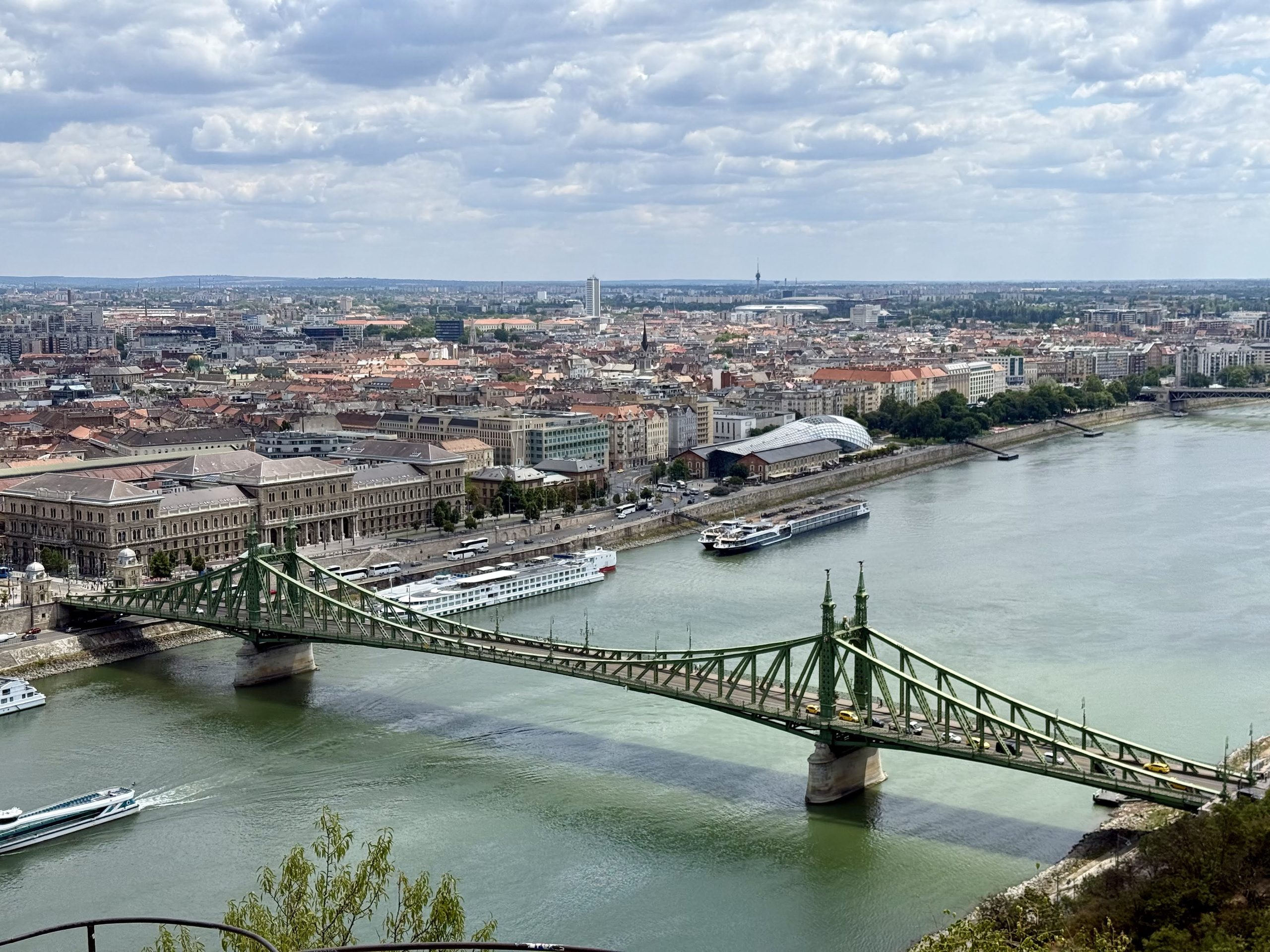
Gellért Hill is a good final stop if you still want another walk and a different view of the city. The renovated Citadella is now open: its park, Liberty Statue and several lookout terraces are free to visit. The indoor Bastion of Liberty exhibition costs 4,900 HUF for adults and gives access to two additional terraces. You can walk up from the Buda side or take bus 27 to Búsuló Juhász and walk the final stretch. From the hill, head down towards Liberty Bridge to return to Pest.
♨️ Day 3: Andrássy Avenue, Heroes’ Square and Széchenyi Bath
Start at the House of Terror on Andrássy Avenue. If you visit one museum in Budapest, this is the one I recommend. It covers Hungary’s Nazi and communist dictatorships and helps make sense of the country’s history after the Second World War. Give it a proper morning rather than trying to squeeze it in between other stops. It is open Tuesday to Sunday, and the full-price ticket is currently 4,000 HUF, bought at the museum.
Continue along Andrássy Avenue to Heroes’ Square, then walk into City Park. Take a look around Vajdahunyad Castle and leave yourself time for a break before the baths. This part of the route is easy to shorten: the M1 metro runs beneath Andrássy Avenue if you would rather save your energy for the afternoon.
Spend the rest of the day at Széchenyi Thermal Bath, right by City Park. This is the bath I would choose for a first Budapest visit, especially if you want time in the outdoor pools. Bring swimwear, a towel and slippers, and allow a few hours so the visit actually feels relaxing. A standard ticket with a locker currently costs 13,200 HUF Monday to Thursday or 14,800 HUF Friday to Sunday; holiday and peak dates cost more. Check the official site before you go.
Gellért Bath remains closed for renovation, with reopening expected in 2028.
🕍 Day 4: The Jewish Quarter and Great Synagogue
Begin at the Dohány Street Synagogue, the largest synagogue in Europe. I would go inside rather than only stop for a photo: the ticket also covers the Hungarian Jewish Museum, the cemetery and the Raoul Wallenberg Memorial Park, where the Tree of Life commemorates Holocaust victims. A short guided tour of the synagogue and memorial grounds is included with admission. Allow at least a couple of hours if you want to see the museum as well. It closes on Saturdays and Jewish holidays, and Friday visits have shorter hours.
From there, explore the Jewish Quarter on foot. The area is compact, so you can wander through its streets and courtyards without planning every turn. You will see another side of the neighbourhood alongside its historic sites: busy cafés, street art and the ruin bars that have made it one of Budapest’s main evening areas.
I would keep the rest of Day 4 short, particularly if you have a flight home.
🍽️ What to eat and drink in Budapest
For a savoury snack, try lángos: fried dough traditionally topped with garlic, sour cream and grated cheese. It is substantial, so I would have it for lunch rather than just before dinner.
Kürtőskalács is the sweet treat I most want friends to try. The dough is wrapped around a spit, baked until golden and coated with sugar; the best time to eat it is while it is still warm. I recommend Molnár’s Kürtőskalács on Váci Street when you are exploring central Pest. If you are following Day 3 through City Park, stop at Édes Mackó near the zoo instead. It serves both traditional chimney cake and desserts made with it.
Leave room for strudel with coffee or Somlói galuska after a meal. The latter is a rich dessert of sponge cake, cream and chocolate sauce. For a little supermarket discovery, look in the refrigerated section for Túró Rudi, a chocolate-coated curd cheese snack that is very familiar to Hungarians.
Order a Hungarian wine with dinner. If you usually drink white, a dry Furmint from Tokaj is a good place to start; Tokaj is also known for its sweet Aszú dessert wine. For red, look for Egri Bikavér, a blend from Eger, or Cabernet Franc from Villány. You do not need to know the producers beforehand: asking for a glass from one of these regions is an easy way to try something local.
If you like sparkling wine, there is also a Törley cellar tour in Budafok. The 90-minute visit covers the museum, ageing cellar and how Hungarian pezsgő is made, followed by a tasting of three sparkling wines. It currently costs 6,900 HUF and requires advance registration. The scheduled tours are in Hungarian only, so I would recommend it if you understand Hungarian or are happy to visit for the cellar and tasting. Check the Törley Museum’s tour dates and booking details before planning around it.
If your dates coincide with DiningCity Restaurant Week, participating restaurants offer special three-course menus at set prices, booked through the official Restaurant Week site. It is a useful way to plan a more elaborate meal, but it only runs on selected dates and popular tables can fill up. The current autumn 2026 edition is scheduled for 1–18 October.
🏨 Where to stay in Budapest
For this four-day itinerary, I would stay on the Pest side of the river. Look around Deák Ferenc tér, the Basilica or central District V if you want to walk to many of the main sights and have an easy connection to the 100E airport bus. The area around Andrássy Avenue and Oktogon is another useful base, particularly for the House of Terror and the route towards Heroes’ Square.
Find a place to stay
The Jewish Quarter in District VII suits you if you want restaurants and nightlife nearby. I would check the hotel’s exact street and recent reviews before booking there, especially if a quiet room matters to you. You can stay in Buda, but for this particular route I would choose central Pest to make the four days easier to navigate.
My booking tip: Check the hotel’s location on a map, not just its district name. For a short trip, a convenient base is worth more to me than saving a little on a room that adds a long journey at the start and end of every day.
I would use an extra day for one trip beyond central Budapest, based on what you most want to see. Szentendre and Gödöllő are straightforward outings by suburban railway. Visegrád takes more planning but rewards you with a view of the Danube Bend. Memento Park is the shorter option if you would still like part of the day in Budapest.
Szentendre is my pick for a relaxed day out. Take the H5 HÉV from Batthyány tér, then wander through the old town’s narrow streets, browse its galleries and walk by the Danube. The journey is around 40 minutes each way, so you can take your time there and still return to Budapest for the evening.
Choose Gödöllő Royal Palace if you would rather spend the day inside a historic residence. Its restored rooms trace the palace’s history, including its years as a royal summer residence associated with Queen Elisabeth, often called Sisi. Take the H8 HÉV from Örs vezér tere and get off at Gödöllő, Szabadság tér, close to the palace. Leave time for the grounds after the exhibition.
For scenery, go to Visegrád. The main draw is the Citadel above the Danube Bend; you can also visit the Royal Palace below it. Plan how you will reach the hilltop before setting off, as it is some distance from the riverside. From Budapest, you can take a bus from Újpest-Városkapu, or a train to Nagymaros followed by the ferry across the Danube. Check the return connections, especially if you want to stay until late afternoon.
Memento Park is the choice for anyone particularly interested in Hungary’s communist-era history. It displays statues and monuments removed from public spaces after the political changes of 1989–90. It is outside the centre but works as a half-day visit: take metro M4 to Kelenföld, then a bus to the park.
For a day trip to Szentendre, Gödöllő or Visegrád, I recommend the Pest Vármegye24 ticket. It currently costs 999 HUF and covers 24 hours of travel on HÉV trains, regional trains and eligible buses within Budapest and Pest County. It makes the return journey simple, but it does not cover Budapest’s metro, trams or ordinary city buses. Keep your Budapest travelcard or buy a separate city ticket for those connections. The ferry to Visegrád also needs its own ticket.
?
FAQ Budapest
Pinterest
Save this guide for later
Planning your trip? Save these pins for easy reference.
Written by
Travelisse
Travel writer · Photographer · Founder of Travelisse
Travelisse founder, travel writer, and photographer sharing practical guidance built from firsthand experience.