My 4-Day Shanghai Itinerary: City Highlights & Water Towns
Four days in Shanghai, from the Bund and Yu Garden to Zhujiajiao, Tongli and Suzhou. This is the first-time itinerary I’d actually recommend.
Published
June 29, 2026
Updated
September 25, 2026
Destination
Asia · China
Shanghai isn’t just a destination – it’s a feeling. Here’s the exact itinerary that made me fall completely in love with China.
In four days, I glided through 1,700-year-old canals, stood inside a breathtaking UNESCO garden, and watched the sun set over one of the most electric skylines on Earth. This isn’t a highlight reel; this is the real itinerary, the one I’d hand to any friend planning their first trip to China and say: do this, in this order, and trust the process.
🛬 Day 1: Landing in Shanghai, Jet Lag, First Impressions & Getting Your Bearings
Landing in Shanghai for the first time is a sensory overload, in the best possible way. I stepped off the plane at Pudong International Airport after a long overnight flight and immediately felt the buzz of one of the world’s most exciting cities. The signs are all in characters, the scale of everything is so large, and the air has that distinct city-energy that tells you immediately: you are somewhere entirely new.
Getting into the city is really easy. Shanghai has two major airports: Pudong (PVG) handles most international arrivals, and Hongqiao (SHA) connects to domestic routes. From Pudong, you have two options: the Maglev train whisks you to Longyang Road Station in just 8 minutes at 430 km/h – one of those pinch-me moments where you realize you’re actually in China. Or you can take the more budget-friendly Metro Line 2 directly from the airport all the way into the city center, which takes around 50–60 minutes but costs just a few yuan. I took the metro on arrival (practical, easy, cheap). From Hongqiao, Metro Line 2 also gets you downtown in about 40 minutes for similarly pocket-friendly prices.
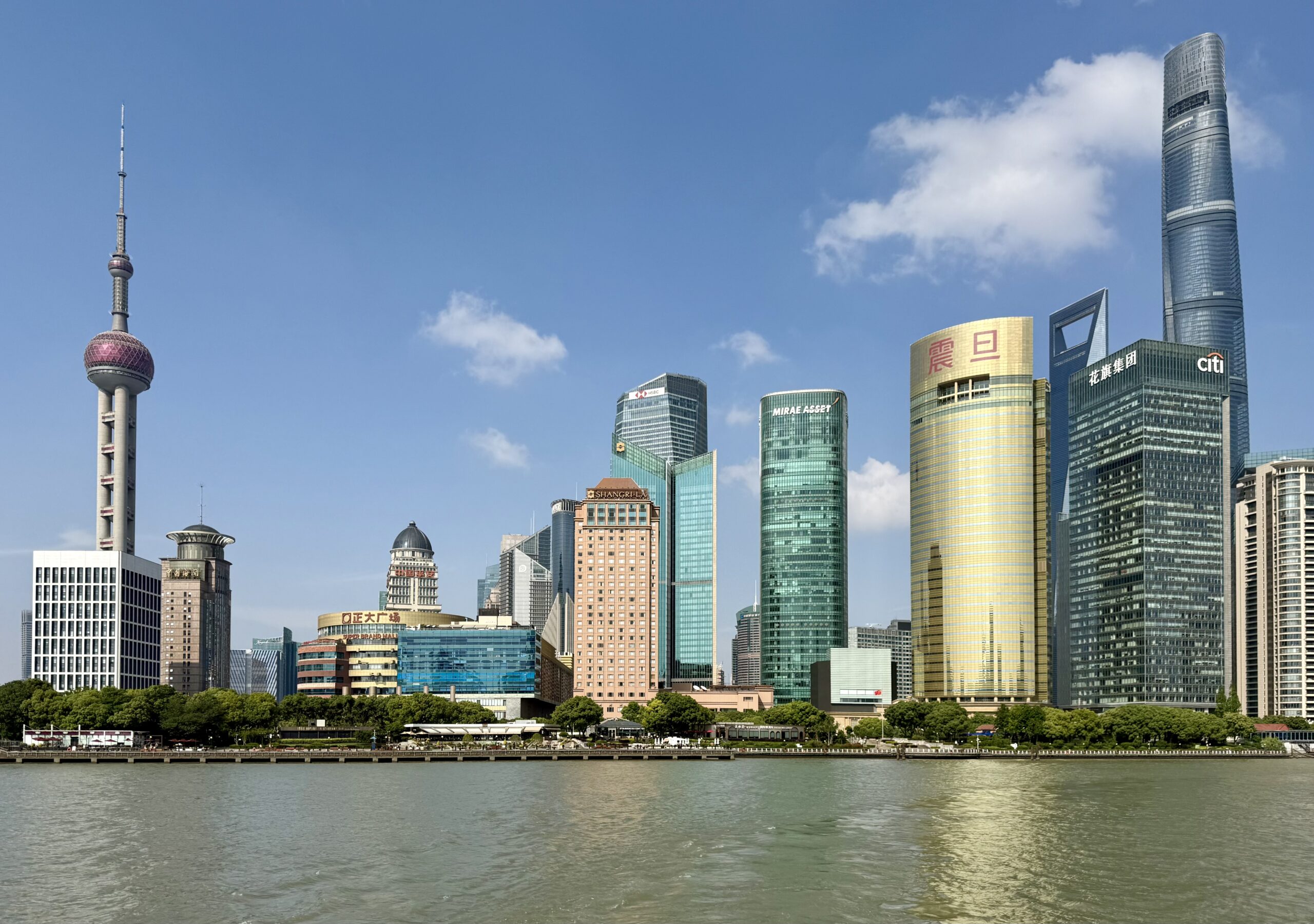
On arrival day, I kept things deliberately slow. Jet lag hits differently when you’ve crossed six, eight, or twelve time zones, and forcing a packed sightseeing day on Day 1 is a rookie mistake I was not going to make. Instead, I checked in, took a long walk along The Bund in the late afternoon: no agenda, no selfie pressure, just absorbing the skyline.
I ended up at Dahuchun on Sichuan Middle Road, a Michelin Bib Gourmand find sitting just steps from the Bund, and it was one of the best first meals I could have asked for in China. The Sichuan spice levels were perfect: just enough heat to wake you up after a long flight, and the portions were generous enough that I nearly rolled back to the hotel. Everything came out almost immediately, the atmosphere was lively and loud in the best way, and the prices were so unbelievably reasonable that I checked the bill twice. For authentic, mouth-watering Sichuan cuisine at those prices, right next to one of the world’s most famous waterfronts, Dahuchun earns the recommendations it gets.
🌊 Day 2: Zhujiajiao: The Venice of Shanghai (Ancient Town Day Trip)
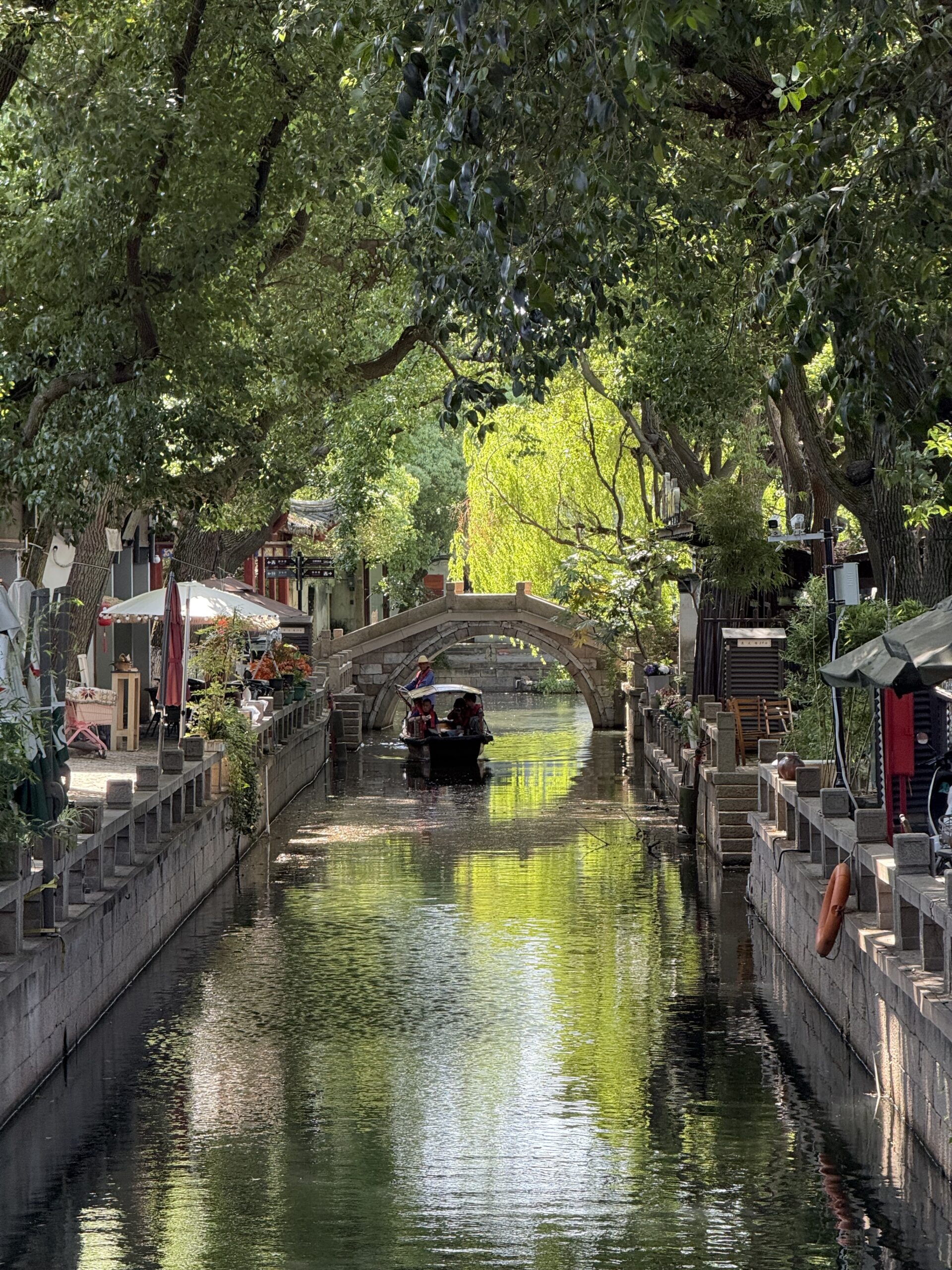
On the next day, I left the skyscrapers behind and took Metro Line 17 westbound to Zhujiajiao, about an hour from Hongqiao Station, and one of the easiest day trips you’ll ever take from a major city. The moment I stepped off into the stone-paved lanes of this 1,700-year-old water town, something shifted. The canal reflections, the wooden shop fronts, the smell of dumplings drifting from kitchens the size of my bathroom, it felt like stepping into a painting that somehow still had people living inside it.
The non-negotiable highlight is Fangsheng Bridge, a dramatic stone arch that stretches across the Caogang River and gives you the town’s most iconic shot. I arrived early, just after 9 AM on Friday, and had the bridge almost entirely to myself. By midday the tour groups arrive, so the early bird advantage here is very real.
After the bridge, I got completely and happily lost in the lane maze for an hour. You can also take the wooden sampan boat ride along the canals: 20 to 30 minutes of gliding past doorways that open directly onto the water, past flower pots on windowsills and cats sleeping on stone steps. It costs around 80–100 CNY.
One lesson I learned: save your souvenir shopping for Shanghai itself. Scenic towns charge premium prices for things you’ll find cheaper back in the city.
🏯 Day 3: Tongli, China’s Best-Kept Secret (Suzhou Day Trip)
If Zhujiajiao is Shanghai’s water town, Tongli is China’s best-kept secret. I took the bullet train from Shanghai Railway Station to Suzhou (just 25–30 minutes, around 60 CNY return) and spent the morning in Suzhou before heading to Tongli in the afternoon. The two together make a day that feels almost impossibly full without ever feeling rushed.
Suzhou greeted me with the Humble Administrator’s Garden, a UNESCO-listed 16th-century masterpiece of pavilions, rockeries, ponds, lotus flowers, and bamboo groves so carefully arranged that every turn feels deliberately framed. One important tip: visit on a weekday. On weekends the garden is genuinely crowded and hard to enjoy. Afterward I wandered Pingjiang Road for sweet noodles and Taihu fish before catching the metro and taxi to Tongli.
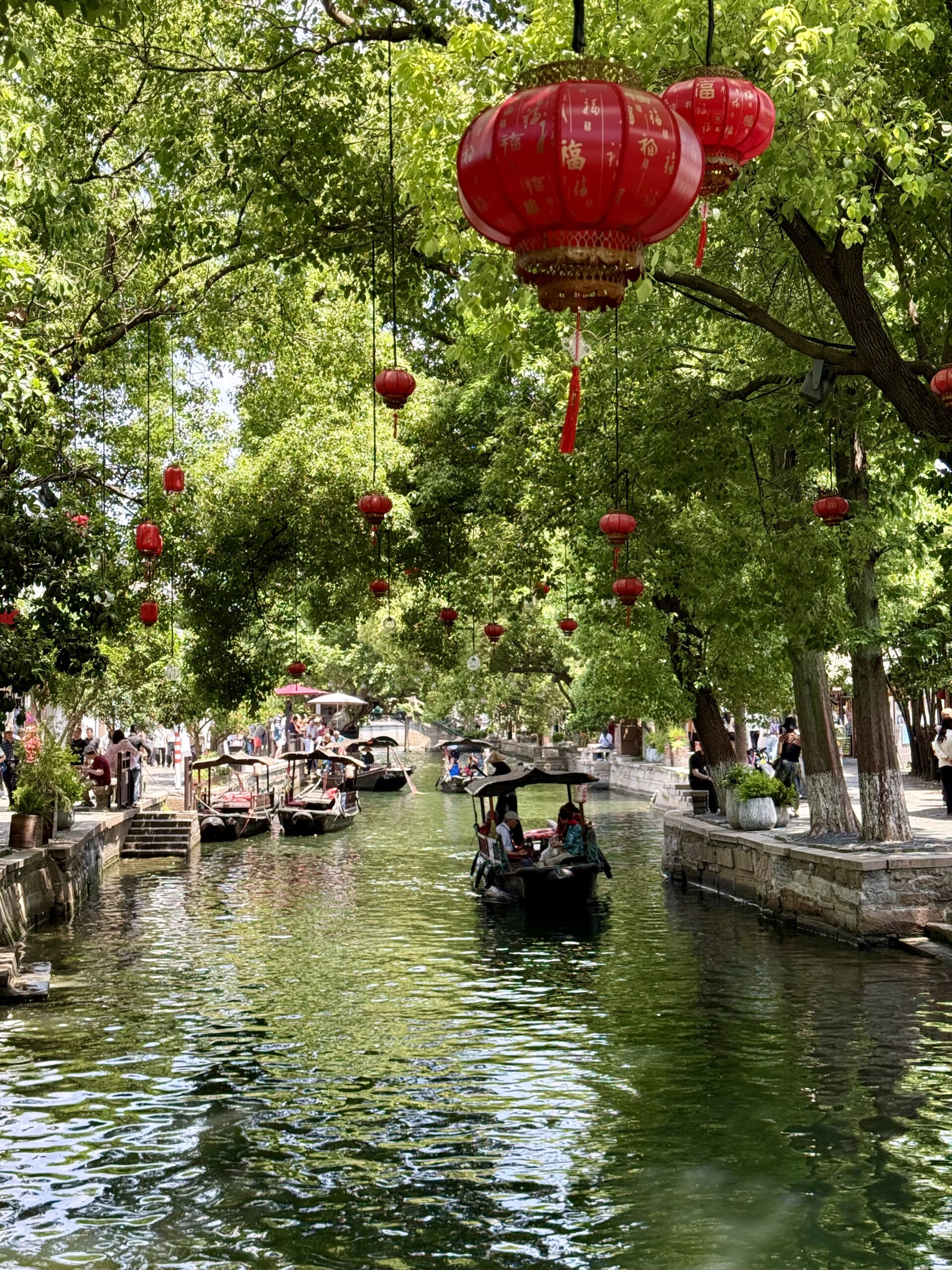
Tongli stopped me in my tracks. The 100 CNY entrance ticket covers nine attractions, and the crown jewel is Tuisi Garden, a UNESCO-listed retreat where a retired Qing Dynasty official once came to rest and reflect, and where the garden design is so precise that every view is framed like a scroll painting. I crossed the famous Three Bridges: Futang, Jingou, and Yuanba, in sequence, which local tradition says brings good fortune, health, and prosperity. Whether it worked or not, crossing three stone arch bridges over mirrored canals while red lanterns sway overhead is its own reward.
You can also go for a boat ride here. It costs 80–120 CNY per boat (split it with fellow travelers if you can). You glide through narrow waterways between houses whose front doors open directly onto the canal, with people living life two feet above the water, completely unbothered. Tongli also transforms after sunset: red lanterns ignite along the canal edges, the reflections turn the whole town into liquid gold. On the way back to Shanghai I stopped at Qili Shan Tang: Suzhou’s glorious 7-kilometer canal street, one metro stop from the station, and walked it slowly in the fading light.
After two days living in ancient China, Day 4 brought me back to the city. This is a place with two completely distinct personalities: ancient water towns and lantern-lit canals on one hand, and a jaw-dropping glass-and-steel skyline on the other. I saved the classic Shanghai highlights for the last day, which also doubled as my travel day to the next destination, and the balance worked perfectly.
I started on The Bund. The morning light turns the Pudong towers soft gold, the river is quiet, and the promenade belongs to joggers and elderly locals doing tai chi rather than selfie crowds. I walked the full length slowly, then crossed the Huangpu River to Pudong. Here, you can take the elevator to the observation deck of Shanghai Tower, the world’s second tallest building, 118 floors up, 180 CNY.
I went into Yu Garden. This Ming Dynasty classical garden sits at the heart of the Old City bazaar, surrounded by curving dragon-topped walls, pavilions perched over koi ponds, and courtyards so serene they feel impossible given the chaos of the market streets directly outside. Entry costs 40–70 CNY. Weekends get so crowded here that you should aim to go on a weekday. Nearby, the City God Temple is free to enter and gives the whole neighborhood a ritual gravity that makes everything feel more layered and meaningful.
My last stop of the trip was Jing’an Temple, one of Shanghai’s most iconic Buddhist temples sitting in the middle of one of the city’s busiest intersections, and the contrast is almost surreal. Golden rooftops and incense smoke rise up against a backdrop of gleaming skyscrapers, and the moment you step through the gates, the noise of Shanghai simply disappears. I walked through the main hall past gilded Buddha statues, lit a stick of incense, and felt that specific kind of stillness that only nearly 1,800-year-old sacred places seem to hold – entry is just 50 CNY.
Day 4 Highlights:
Sunrise on The Bund: free, always worth the early alarm
Shanghai Tower observation deck: ~180 CNY, book in advance online
Allow 2–3 hours buffer before your flight/train for transfers
⏱️ Best Time to Visit Shanghai
Spring (March–May) and autumn (September–November) are the sweet spots. Temperatures are comfortable, the light is beautiful for photography, and the water towns look their absolute best: spring brings cherry blossoms to Suzhou’s gardens, and autumn turns the whole region golden. Summer is hot and humid, but the lotus flowers blooming across every pond and the moody, atmospheric rains create a completely different kind of beauty that’s genuinely stunning to photograph.
The one thing I’d warn against: Chinese national holidays. Golden Week in early October and Chinese New Year (January or February depending on the lunar calendar) bring massive domestic tourism surges that make every popular site genuinely overwhelming. If your travel dates fall during these periods, go early! Arriving at opening time, around 8 or 9 AM, is the single most effective strategy for beating the crowds at Zhujiajiao and Tongli especially.
🏨 Where to Stay in Shanghai
Finding the right hotel in Shanghai makes a surprising difference to how much you enjoy the city. Stay in the wrong district and you’ll spend half your time on the metro; stay in the right one and everything feels effortless. I always book through Trip.com for China: the prices are competitive, the listings are accurate, and the customer support actually helps when something goes wrong, which is more than I can say for other platforms.
Book your stay
For my Shanghai base, I stayed at the Century Asia Island Hotel, and the location alone is worth every yuan. I booked a windowless room to keep costs down, and honestly, I was out from sunrise to late evening every single day, so it made complete sense; the room is compact but clean and comfortable, and everything you actually need after a full day of climbing stone bridges and gliding through canals. I skipped the hotel breakfast entirely: when the street food outside is this good and this cheap, there’s no reason to sit in a dining room. Staff don’t speak English, but a translation app handles every interaction effortlessly, genuinely not an issue.
For your stay, I’d recommend somewhere near Jinling Road for the best combination of location, transport connections, and easy access to central Shanghai. Budget travelers will find great value around ¥200–400 per night; mid-range options with rooftop views and boutique design tend to run ¥600–1,200; and if you want to treat yourself, Shanghai has several genuinely world-class luxury hotels, including The Peninsula, The PuLi, the Ritz-Carlton are genuinely world-class.
Shanghai’s metro is one of the best in the world: clean, fast, logical, and air-conditioned. I used Alipay’s transport QR code for every single ride, which meant I never touched a ticket machine once during the whole trip. Use Amap for directions. For anything not on the metro, DiDi (China’s equivalent of Uber) works flawlessly, connects to Alipay, and costs a fraction of what a taxi would charge a tourist.
Money and Payments
China is almost entirely cashless, and Alipay is the app that makes your trip run. Set it up before you leave home – link your international credit card, activate the metro QR transport feature, and you’re set for everything from street dumplings to museum tickets. WeChat Pay works exactly the same way and is equally accepted. Larger international hotels accept foreign credit cards, but don’t count on it anywhere else.
SIM Card and Internet
A VPN is non-negotiable in China, Google, Instagram, WhatsApp and Gmail are all blocked in mainland China, and there is no workaround once you’re on the ground without one. The easiest solution I found is buying an eSIM with integrated VPN before you travel: it handles everything in one step, no setup headaches, no scrambling at the airport. A local Chinese SIM is useful if you need to register on Chinese apps like Taobao or Meituan (which require a local number for verification), but it won’t unblock any of the Google services. Sort your eSIM before you board, and you’ll land connected and ready to go from minute one.
💰 Budget
Shanghai can be surprisingly affordable once you are there, especially if you use the metro and eat locally. This gives you a practical budget for four days in the city, with the three day trips kept separate so you can easily add whichever ones fit your itinerary.
Expense
Cost
Notes
Accommodation
€160
4 days, typical mid-range cost
Local transport
10–20 CNY
Average per day. Metro fares are typically 2–9 CNY per ride , city buses 1–3 CNY per ride .